Bringing Your Hand-Raised Bird Home
These instructions are specifically for hand-raised, hand-fed birds. Since your bird is already comfortable with humans, the adjustment period is shorter than with untamed birds. Still, a new environment needs a gentle introduction.
New to pet birds? Watch this quick starter guide before reading further:
Pet Birds for Beginners (Video)Before You Arrive Home
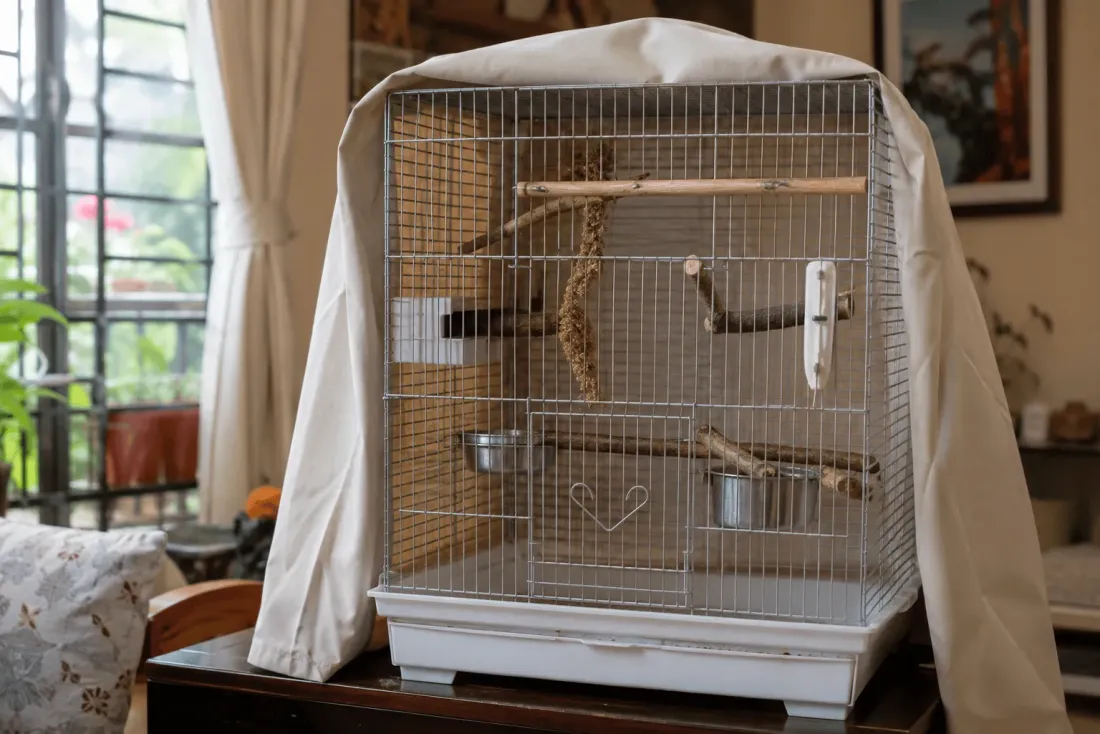
- Set up the cage in advance in a quiet corner away from direct sunlight, kitchen fumes, and loud TVs.
- Stock essentials - fresh water, seed mix or pellets, millet spray (great comfort food), and cuttlebone for calcium.
- Cover three sides of the cage with a light cloth to create a sense of security. Leave the front open so the bird can observe.
- Remove other pets from the room for the first few days.
- Transport tip: In summer, pre-cool the car with AC before placing the bird inside. In winter, cover the carrier with a light blanket to block cold drafts.
Day 1: Let Them Rest
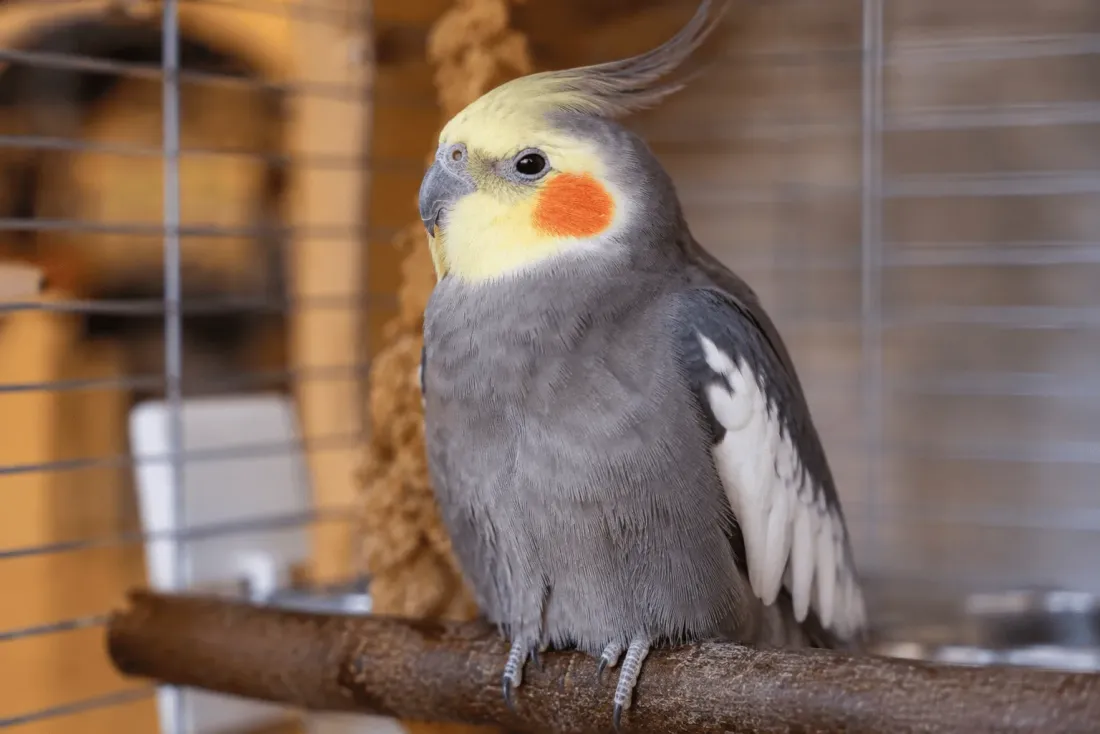
- Place the bird in its cage and let it rest. Do not handle it on day 1.
- Speak softly near the cage. Let the bird get used to your voice and the new sounds.
- The bird may sit quietly, refuse food, or have loose droppings. This is normal stress and usually resolves within 24 hours.
- Keep noise levels low. No loud music, pressure cooker whistles near the bird, or sudden door slams.
- Maintain a consistent routine. Feed at the same times, keep lights on a 12-hour cycle.
Day 2 Onwards: First Interactions
Since your bird is hand-raised, you can begin gentle interactions from day 2. But first, a safety checklist:
Before taking the bird out of the cage, ALWAYS ensure:
- All ceiling fans are OFF
- All doors and windows are closed (or have mesh)
- Other pets (cats, dogs) are in a different room
- No open water containers (buckets, cookers, glasses)
- No hot surfaces (stove, iron) accessible
- Mirrors and glass windows are covered or marked (birds can fly into them)
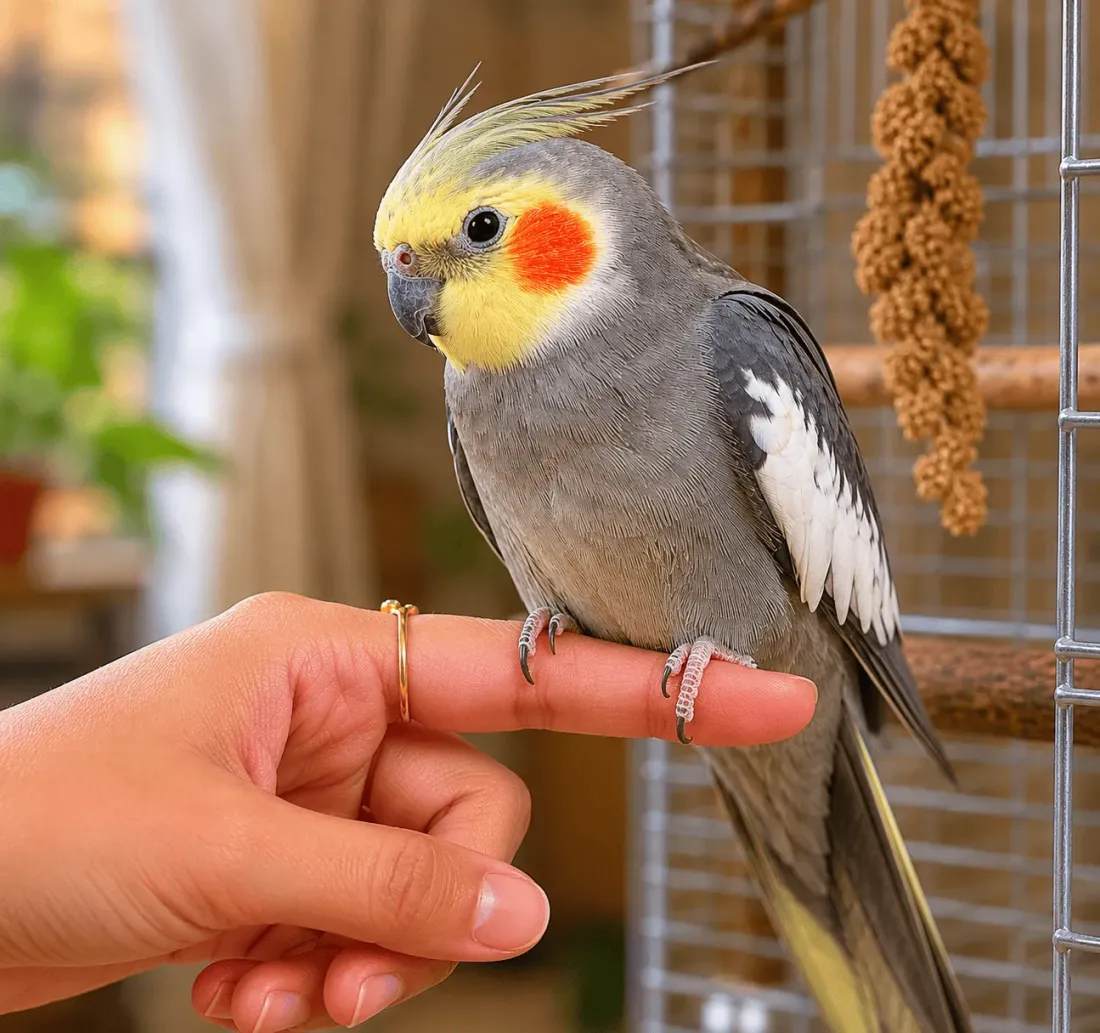
Once the environment is safe, open the cage door. Offer your finger or palm as a platform for the bird to step onto. Watch this short video to learn the correct hand position:
How to Handle Your Bird (Short Video)Days 3-7: Building Familiarity
- Open the cage door and go about your normal work. Let the bird explore and come to you naturally.
- Offer treats (millet, sunflower seeds) near you or from your hand.
- Do not chase or grab the bird. Let it return to the cage on its own, or gently guide it back using the step-up technique from the video above.
- Sit near the cage for 15-20 minutes at a time, reading aloud or talking softly.
- If the bird is eating, active, and vocalising by day 3-4, it is adjusting well.
Set realistic expectations: It takes at least 1 week for a hand-raised bird to become familiar with new people and surroundings, and about a month to become truly comfortable. Until then, focus on basic trust-building and avoid formal training.
Bonding With Your Hand-Raised Bird
Your bird is already hand-raised and comfortable with humans. Bonding with you specifically is about building a personal connection. This takes patience, consistency, and time. Expect at least a month before the bird is fully comfortable in its new home.
Week 1-2: Building Trust
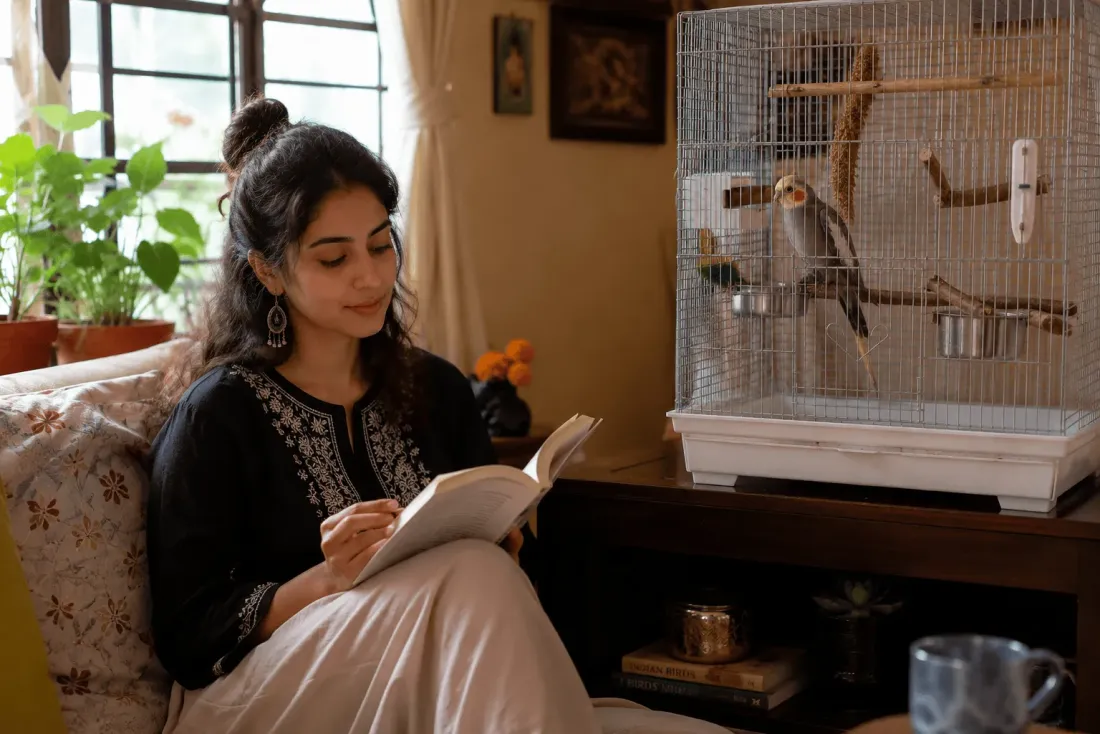
- Be present, not pushy - spend time near the cage without forcing interaction. Read, work on your laptop, or watch TV nearby.
- Talk to your bird daily - use a calm, cheerful tone. Say their name often. Birds learn to associate your voice with safety.
- Offer treats from your hand - millet spray, sunflower seeds, or small pieces of apple. Let the bird come to you.
- Avoid sudden movements - approach the cage slowly. Never grab from above (this mimics a predator).
- Let the bird out daily in a safe room. Open the cage door and let it explore at its own pace. Do not chase it back in.
Week 2-4: Deepening the Bond
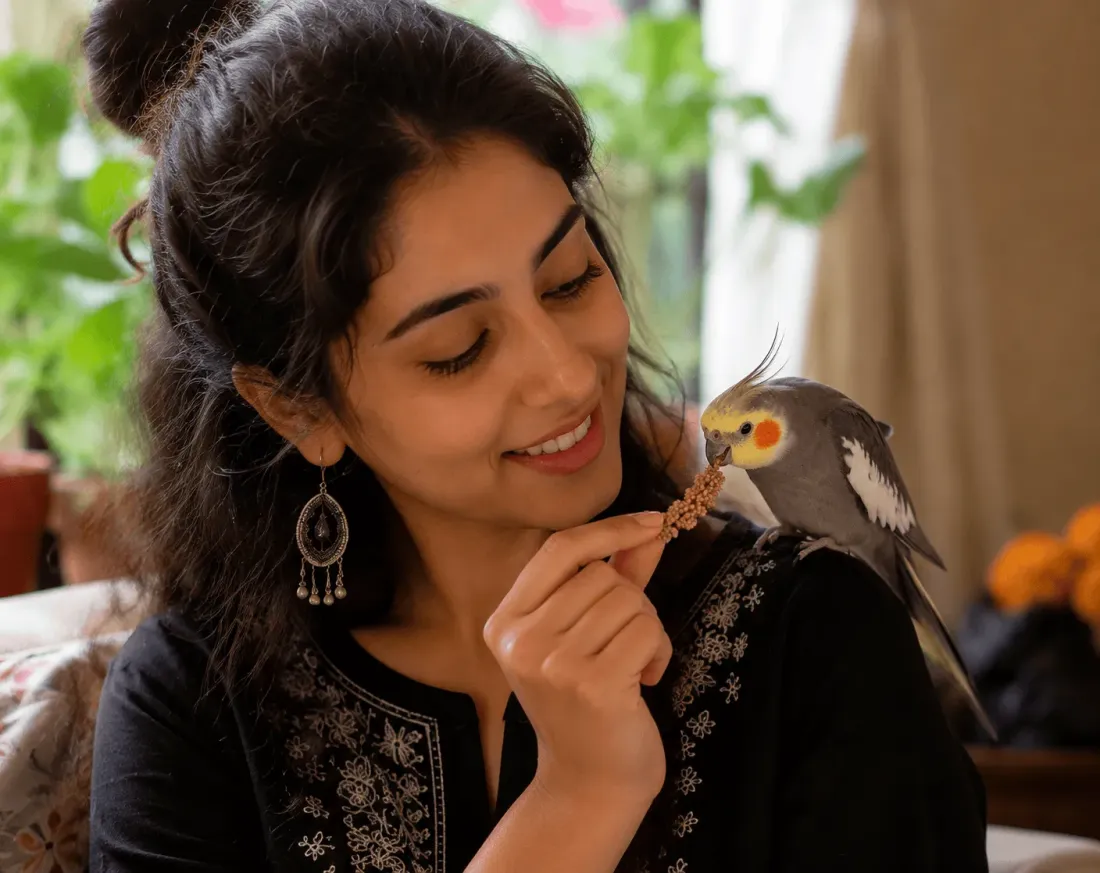
- Flock time - include your bird during family activities. Eat meals together, watch TV together. Birds are flock animals and crave inclusion.
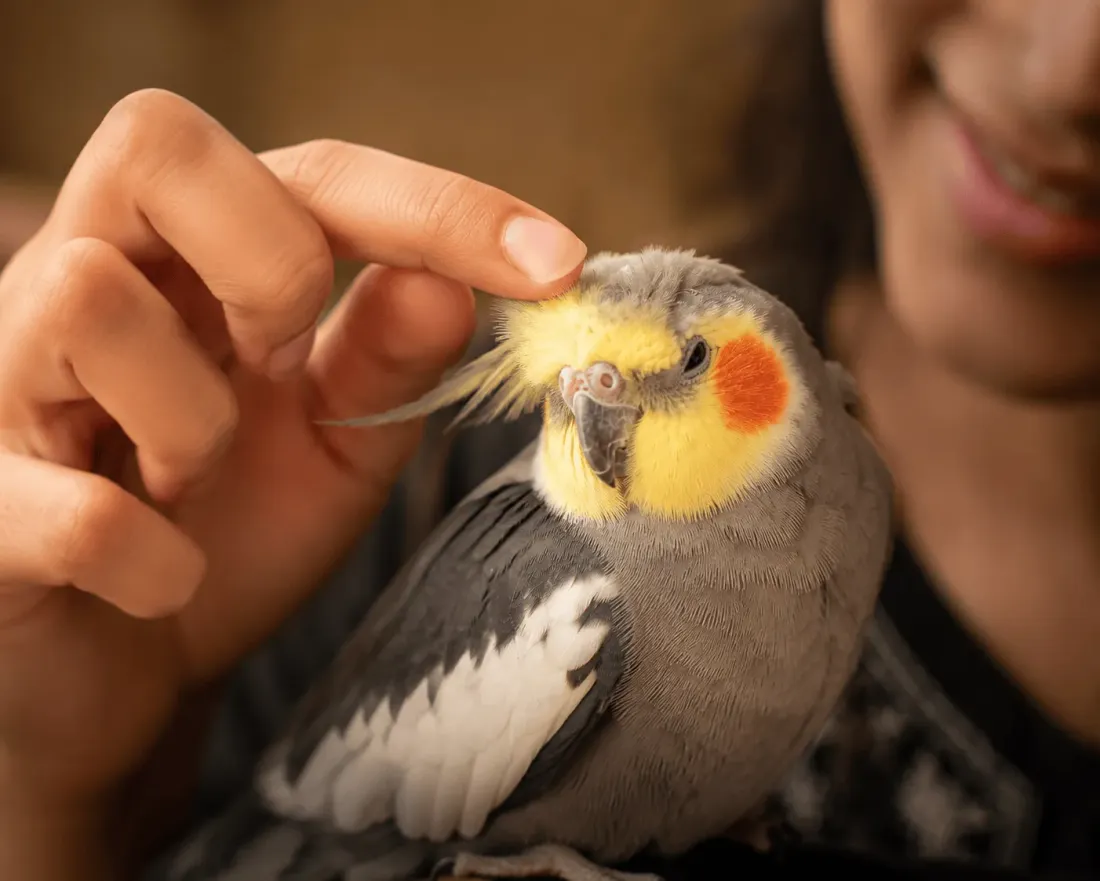
- Head scratches - most cockatiels love gentle scratches on the back of the head and cheeks. Let the bird lean into your touch.
- Shoulder time - let the bird sit on your shoulder while you do household tasks. This builds trust passively.
- Introduce family members one at a time over the first couple of weeks. Too many new faces at once can overwhelm the bird. Let one person be the primary caretaker initially.
After 1 Month: Training
Once your bird is comfortable, familiar with the household, and bonded with you, you can start basic training. Do not rush this. A stressed bird will not learn.
Cockatiel Training Guide (Video)- Step-up command - gently press your finger against the bird's lower chest while saying "step up." Reward immediately with a treat.
- Recall training - call the bird from short distances with a treat visible. Gradually increase distance.
- Keep sessions short - 5-10 minutes, 2-3 times daily. End on a positive note.
- Never punish - if the bird bites or flies away, stay calm. Punishment destroys trust instantly.
Key reminder: Every bird has its own personality. Some bond in a week, others take longer. Consistency and patience are more important than any technique. Repeat basic trust-building daily until the bird is visibly relaxed around you.
Diet & Nutrition
A balanced diet is the foundation of a healthy, long-lived bird. Seed-only diets are the #1 cause of health problems in pet birds. Here's what to feed instead.
Daily Diet Breakdown

40-50% Seed Mix + Pellets
A quality seed mix (with millets, canary seed, safflower) combined with pellets (Zupreem, Harrison's, or Promeal if available locally). Pellets fill nutritional gaps that seeds miss.
30-40% Fresh Vegetables
Daily fresh veggies: spinach (palak), carrot, beetroot, cucumber, capsicum, broccoli, corn, pumpkin. Rotate varieties for different nutrients.
10-15% Sprouts & Protein
Sprouted moong dal, boiled egg (small piece), cooked chana. Excellent protein sources, especially during moulting or breeding.
Occasional Fruits (2-3x/week)
Apple (no seeds), banana, papaya, pomegranate, guava, chikoo. Limit due to sugar content.
Kitchen Superfoods for Birds

- Sprouted moong dal - excellent protein source, easy to prepare at home
- Ragi (finger millet) - calcium-rich, can be offered as cooked porridge
- Bajra & jowar - whole millets, better than processed seed mixes
- Curry leaves - safe and nutritious, birds enjoy nibbling them
- Coriander (dhaniya) - fresh leaves are a favourite treat
- Boiled egg - great for protein, especially during moulting
Foods to NEVER Feed
- Avocado - toxic, can be fatal
- Chocolate & caffeine - poisonous to birds
- Onion & garlic - causes digestive issues and anaemia
- Salt & fried foods - kidney damage
- Apple seeds, cherry pits - contain cyanide
- Milk & dairy - birds are lactose intolerant
- Raw dal/beans - must be cooked or sprouted first
Water
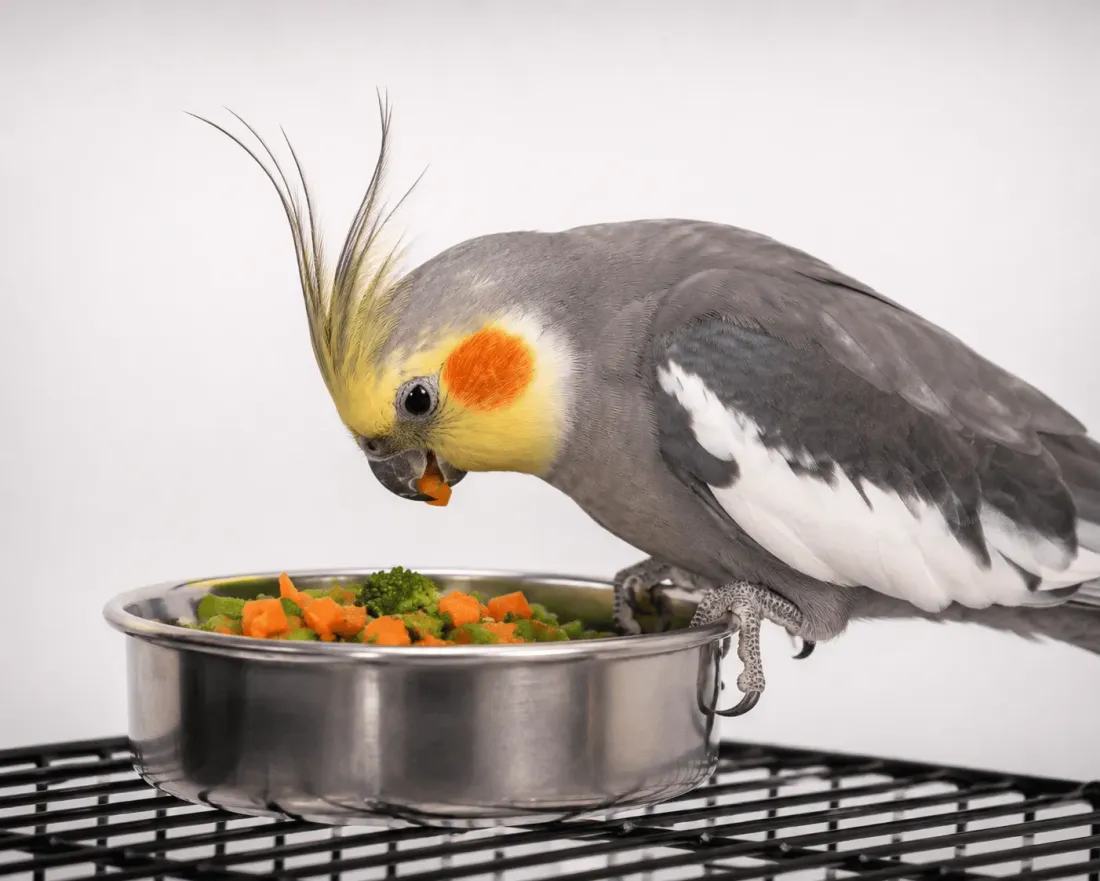
Always provide fresh, clean water. Change it twice daily (3x in summer as bacteria grows fast in heat). Use filtered or RO water. Avoid adding supplements to water unless prescribed by an avian vet.
Important: Never force a diet change. If your bird is on seeds, transition gradually over 2-4 weeks. Mix pellets with seeds, slowly increasing the pellet ratio. Introduce veggies alongside familiar food. Never starve a bird into eating new food.
Health & First Aid
Birds hide illness instinctively (a survival trait from the wild). By the time you notice symptoms, the bird may have been sick for days. Early detection saves lives.
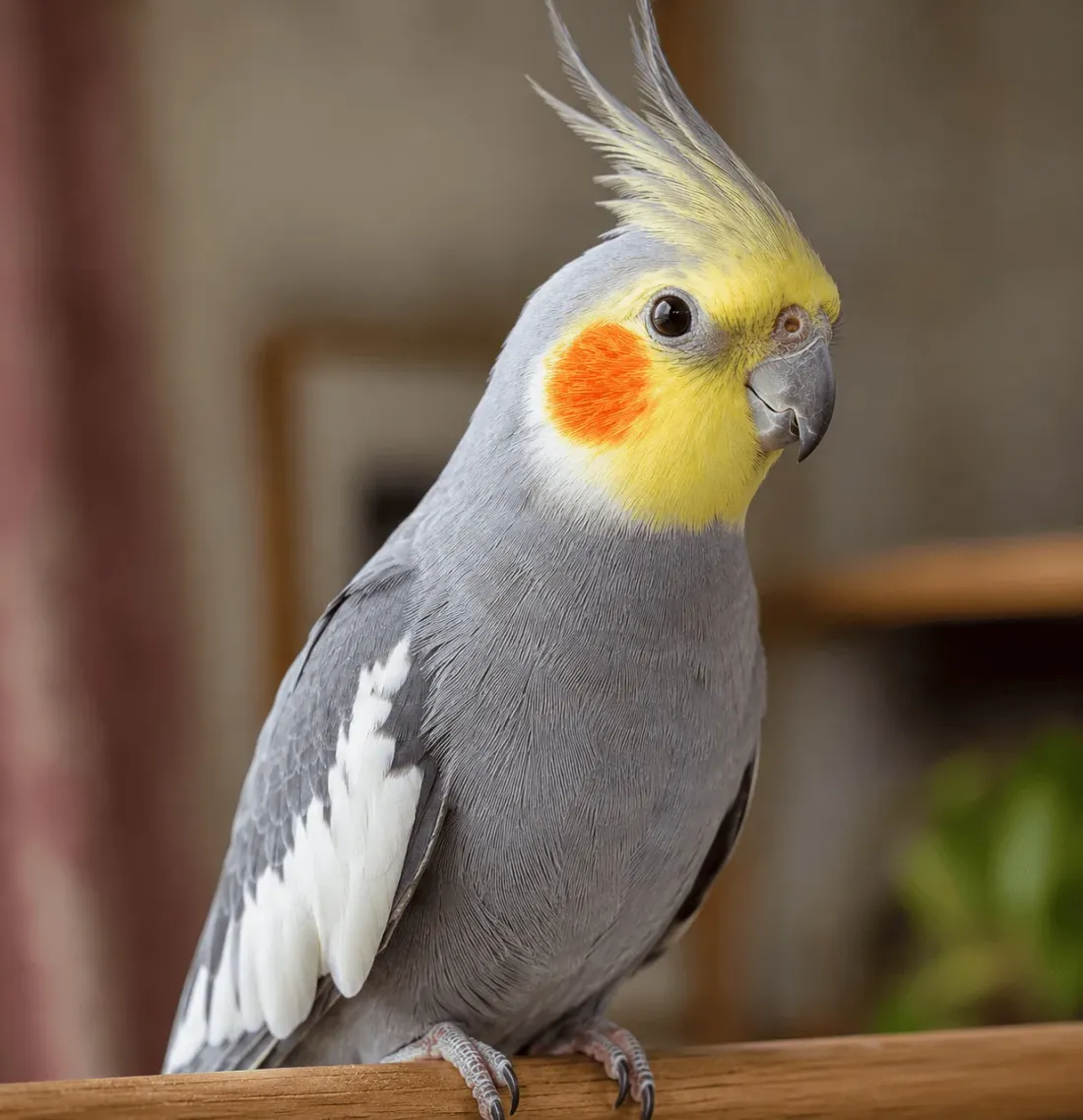
A healthy bird looks like this: bright clear eyes, smooth sleek feathers, an upright alert posture, and clean nostrils. Use this as your baseline to spot changes early.
Warning Signs - See a Vet Immediately
- Sitting fluffed up at the bottom of the cage for extended periods
- Discharge from eyes or nostrils (wet, crusty, or swollen)
- Laboured breathing, tail bobbing while breathing, open-mouth breathing
- Blood in droppings or from any body part
- Not eating or drinking for more than 12 hours
- Sudden weight loss (check the keel bone - if it's sharp/prominent, the bird is underweight)
- Vomiting (different from regurgitation - vomit sticks to head feathers)
- Seizures, loss of balance, or inability to perch
Common Health Issues
- Respiratory infections - caused by drafts, AC blowing directly on the bird, or kitchen fumes. Signs: sneezing, nasal discharge, wheezing.
- Crop infections (sour crop) - from contaminated food/water in hot weather. Signs: vomiting, swollen crop, foul smell from beak.
- Mites & lice - common in humid climates. Signs: excessive scratching, feather loss, scaly patches on beak/feet.
- Heat stress - during summers (40C+). Signs: panting, wings held away from body, lethargy.
- Fatty liver disease - from seed-only diets. Signs: obesity, overgrown beak, lethargy.
Droppings Guide
Normal cockatiel droppings have three parts: a dark green/brown solid (faeces), white paste (urates), and clear liquid (urine). Changes to watch for:
- All-green watery - bird may not be eating (starvation droppings)
- Yellow or bright green urates - possible liver issue
- Red/black in faeces - internal bleeding, emergency
- Undigested seeds - digestive problem, possible infection
First Aid Kit for Bird Owners
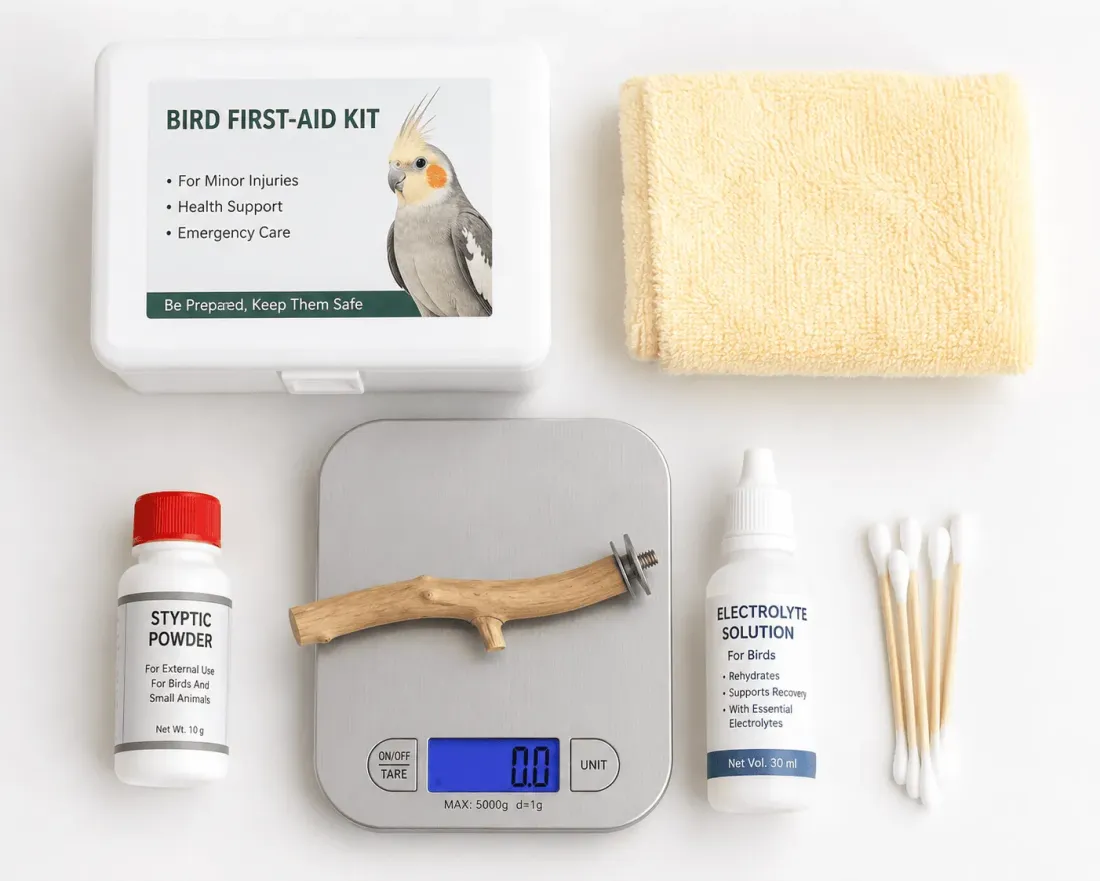
- Styptic powder or cornstarch (to stop bleeding from broken blood feathers or nails)
- Small towel (for safely restraining the bird during emergencies)
- Heating pad or hot water bottle (for keeping a sick bird warm)
- Electrolyte solution (like ORS - a few drops in water for dehydrated birds)
- Digital kitchen scale (to monitor weight weekly - even 5g loss matters)
- Contact number of an avian vet (find one BEFORE you need one)
Finding an avian vet: Avian specialists are rare. Look for vets experienced with birds in your city. In Delhi NCR, ask us for recommendations. We maintain a list of trusted avian vets. Regular dog/cat vets may not have bird-specific knowledge.
Environment & Safety
Your bird's environment directly impacts its health and happiness. Here's how to create a safe, comfortable home.
Cage Setup
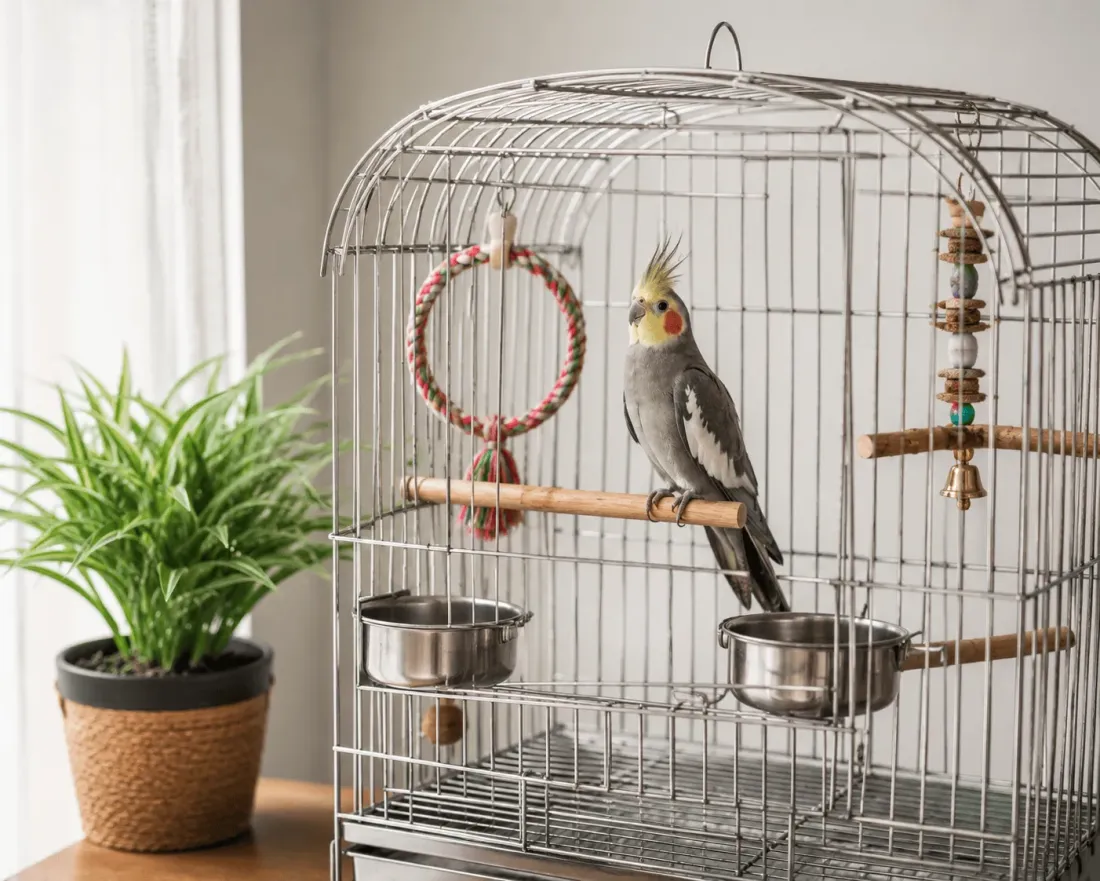
- Size - minimum 18" x 18" x 24" for a single cockatiel. Bigger is always better. The bird should be able to fully spread its wings.
- Bar spacing - 1/2 inch (12mm) for cockatiels and smaller birds. Larger spacing risks head entrapment.
- Material - stainless steel or powder-coated iron. Avoid zinc-coated (galvanised) cages as zinc is toxic to birds.
- Perches - use natural wood perches of varying diameters (neem, guava, or mango wood are safe and locally available). Avoid sandpaper perch covers.
- Placement - at eye level, against a wall (gives security), away from kitchen and bathroom.
Temperature & Climate
- Ideal range - 22C to 30C. Cockatiels tolerate room temperature well but struggle above 38C.
- Summer (April-June) - provide shade, keep water fresh (change 3x daily), offer wet leafy greens for hydration. A shallow water dish for bathing helps cool down.
- Monsoon (July-Sept) - humidity promotes fungal growth. Keep cage dry, increase ventilation, check food for mould daily.
- Winter (Nov-Feb) - cover cage at night with a breathable cloth. Avoid placing near open windows. No direct heater/blower on the bird.
- AC usage - never point AC directly at the cage. Maintain 24-26C. Sudden temperature drops cause respiratory infections.
Household Dangers
- Non-stick cookware (Teflon) - fumes from overheated non-stick pans kill birds within minutes. Use stainless steel or iron cookware if your bird is near the kitchen.
- Incense sticks (agarbatti) & dhoop - smoke irritates bird lungs severely. Never burn near the bird.
- Mosquito coils & liquid repellents (Good Knight, All Out) - toxic fumes. Use a mosquito net over the cage instead.
- Room fresheners & aerosol sprays - perfumes, deodorants, Lysol, all dangerous.
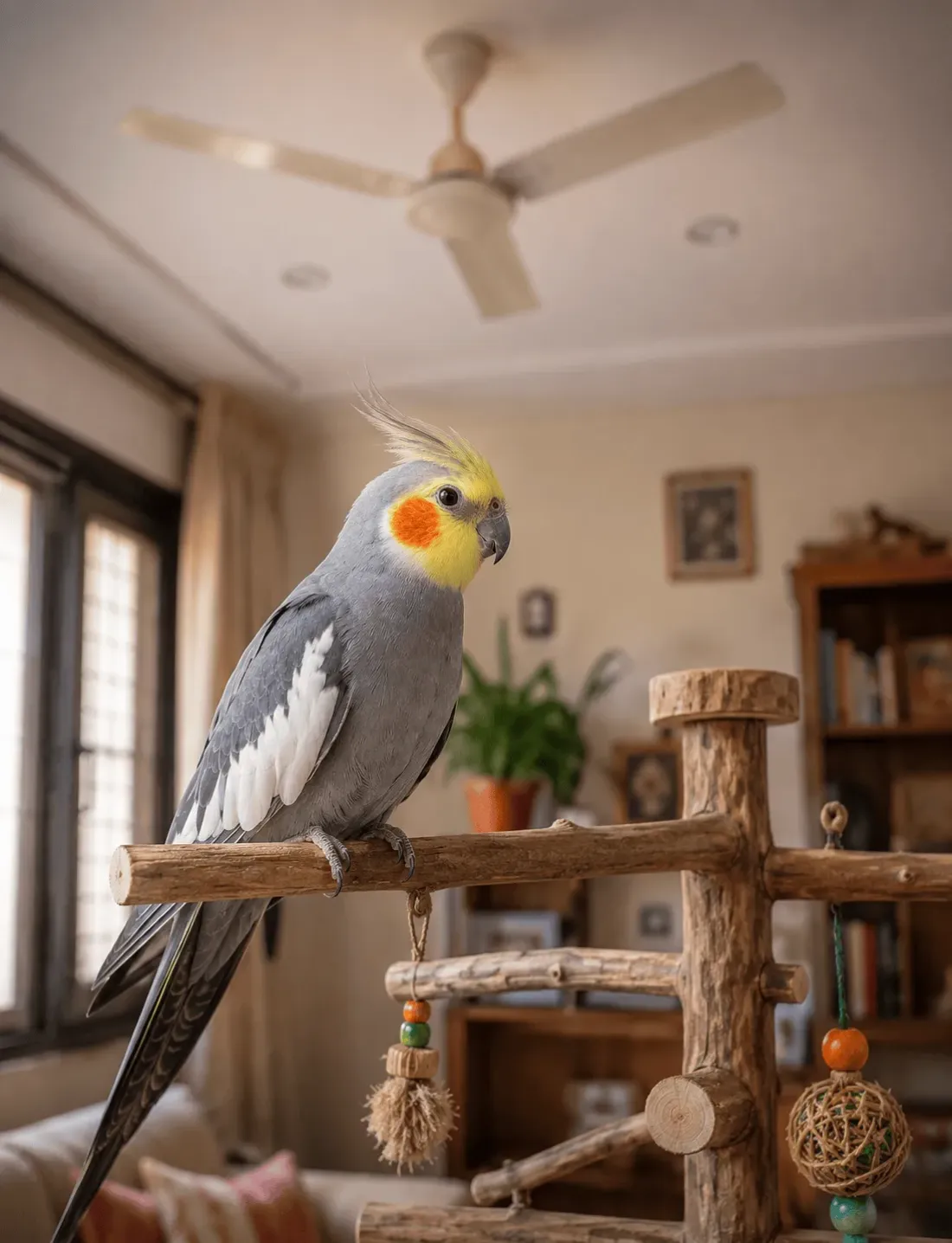
- Ceiling fans - a leading cause of bird injuries. Turn off fans when bird is out of cage, or use fan guards.
- Open windows without mesh - birds can fly out. Install bird-safe mesh on windows.
- Other pets - cats and dogs are natural predators. Never leave unsupervised.
Light & Sleep
- Birds need 10-12 hours of uninterrupted sleep in complete darkness.
- Cover the cage at night with a dark, breathable cloth.
- Avoid keeping the bird in a room where the TV runs late at night.
- Some natural sunlight (indirect, morning sun) is beneficial for vitamin D synthesis.
Grooming & Hygiene
Birds are naturally clean animals, but they need your help to maintain good hygiene in captivity.
Bathing
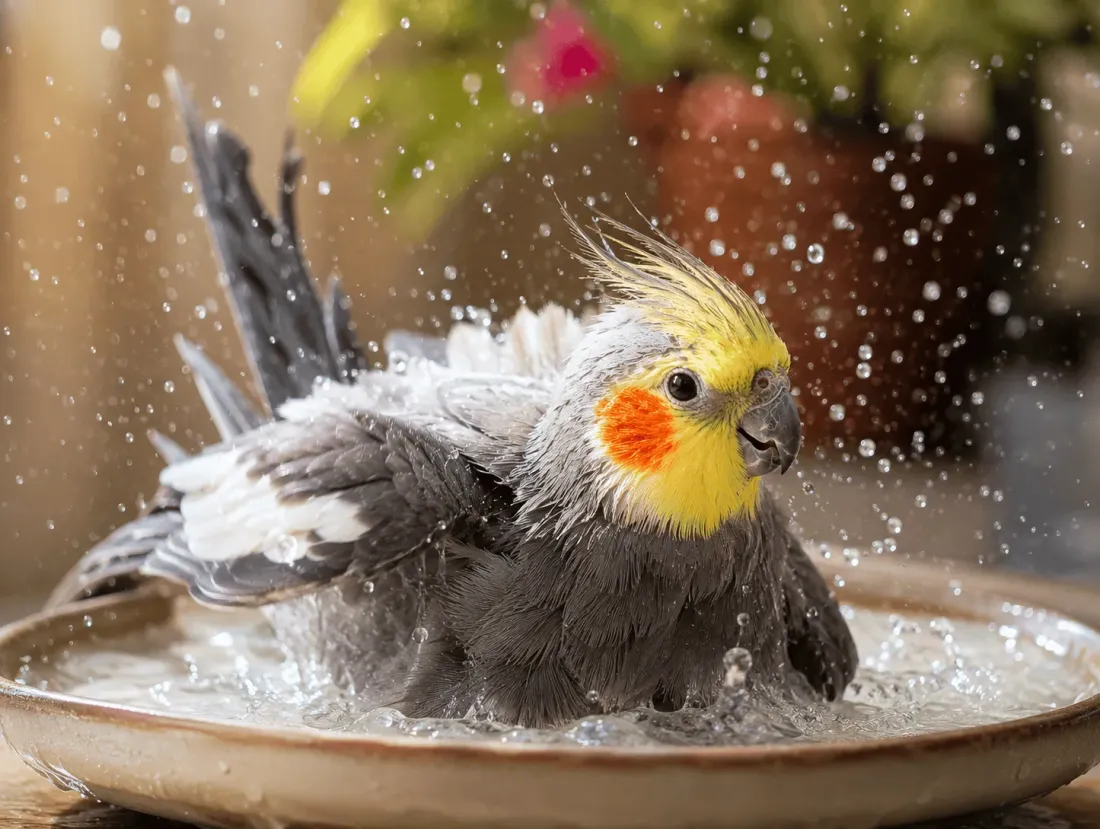
- Frequency - offer a bath 2-3 times per week. Daily in summer, less in winter.
- Method - shallow dish of lukewarm water (not cold), or a gentle mist spray from a clean spray bottle. Let the bird choose to bathe, never force it.
- Timing - always bathe in the morning so feathers dry fully before nightfall. Wet feathers at night can cause chills.
- Never use soap - plain water only. Bird feathers have natural oils that soap strips away.
Nail Trimming
- If nails get too long (snagging on fabric, difficulty perching), they need trimming.
- Use bird-specific nail clippers or small human nail clippers.
- Trim only the tip. Avoid the quick (blood vessel visible as a dark line in light-coloured nails).
- Keep styptic powder or cornstarch handy in case of accidental bleeding.
- Natural alternative - rough-textured perches (concrete or natural bark) help keep nails filed naturally.
Cage Cleaning Schedule
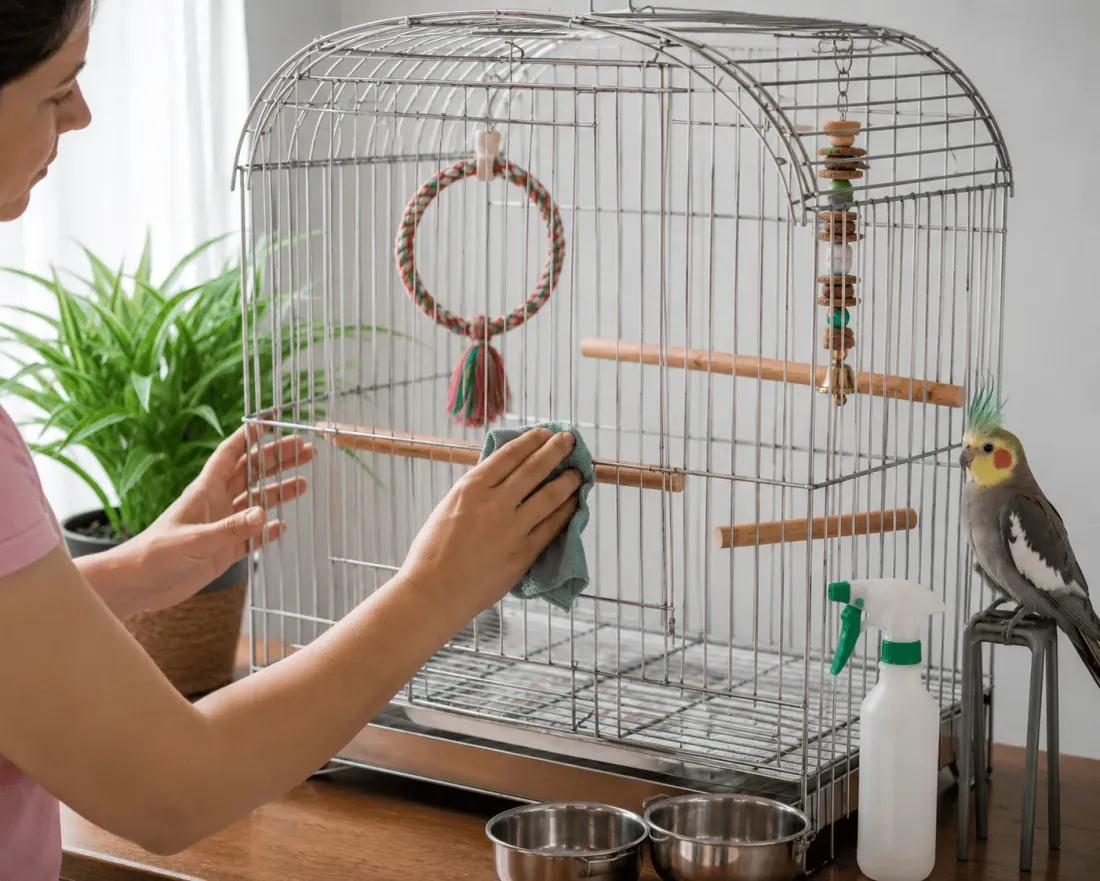
Daily
- Change water (2-3x in summer)
- Remove uneaten fresh food
- Wipe food/water bowls
- Replace cage liner/newspaper
Weekly
- Wash all bowls with hot water
- Scrub perches
- Wipe cage bars
- Clean cage tray thoroughly
Monthly
- Deep clean entire cage
- Disinfect with vinegar + water
- Replace worn perches/toys
- Check for rust or damage
Feather Care
- Moulting - birds shed and regrow feathers 1-2 times per year. They may be irritable and need extra protein during this time. Offer boiled egg or sprouted dal.
- Pin feathers - new feathers grow in a waxy sheath. Birds appreciate gentle help removing sheaths on their head (where they cannot reach).
- Feather plucking - if your bird pulls out its own feathers, it is a sign of stress, boredom, or illness. Consult an avian vet.
Cleaning tip: Avoid using phenyl (Lizol) or strong chemical cleaners near the cage. Use a 50:50 mix of white vinegar and water for safe disinfection. Neem water is also a natural, bird-safe option for wiping cage bars.
Understanding Bird Behaviour
Birds communicate through body language and sounds. Learning to read your bird helps you understand their needs and build a stronger bond.
Normal Behaviours (Don't Worry)
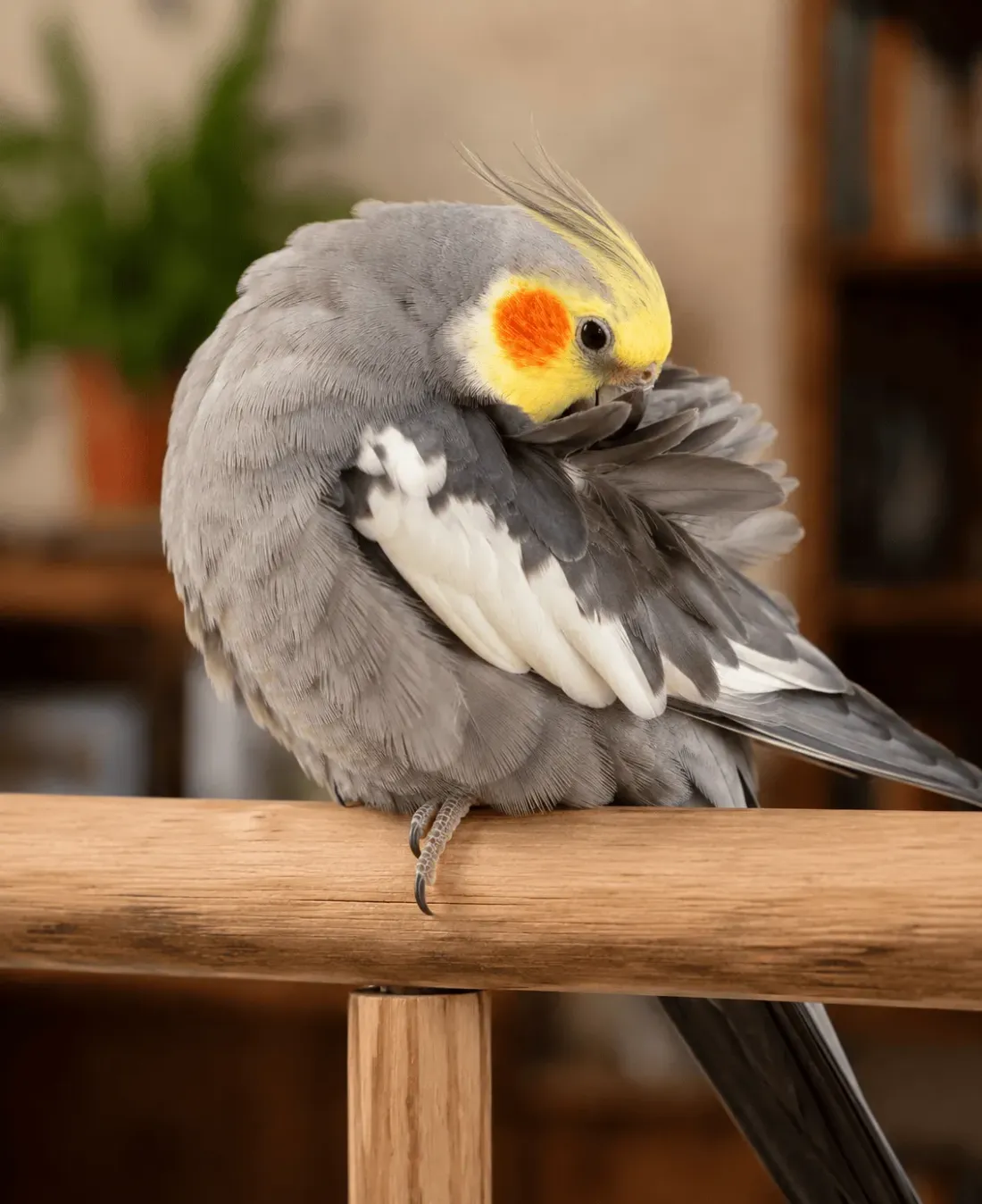
- Beak grinding - a soft grinding sound, usually before sleep. This means your bird is content and relaxed. It is a sign of comfort.
- Preening - birds spend a lot of time grooming their feathers. This is normal hygiene. They may also preen you (nibbling your hair or clothes) as a sign of affection.
- Head bobbing - in cockatiels, this often means they want attention or are excited. Baby birds bob when hungry.
- One-foot sleeping - standing on one foot with the other tucked up means the bird is relaxed and comfortable.
- Fluffing up briefly - a quick fluff and shake is just rearranging feathers. Only worry if they stay fluffed for long periods.
- Regurgitation - bobbing head and bringing up food towards you or a toy. This is a sign of affection (they are "feeding" you). Different from vomiting.
- Stretching wings - stretching one wing and one leg on the same side is normal exercise, like a human stretch after sitting.
- Tail wagging/fanning - a happy, excited bird. Often seen when you come home or offer a treat.
Crest Language (Cockatiels)
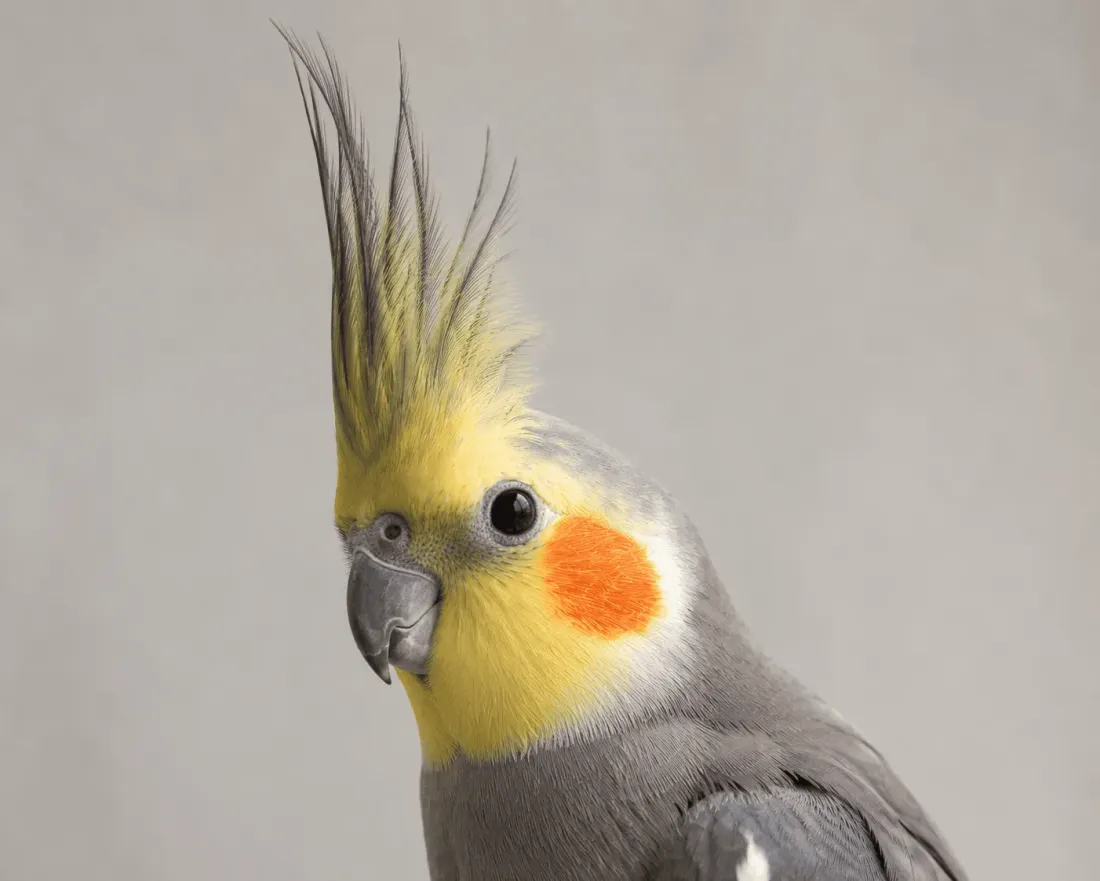
- Crest straight up - startled, curious, or alert. Something caught their attention.
- Crest flat against head - scared, angry, or defensive. Give them space.
- Crest relaxed (slightly back) - calm and content. This is the ideal resting state.
- Crest up with hissing - warning sign. The bird feels threatened. Back away slowly.
Night Frights
Cockatiels are especially prone to night frights. They may suddenly thrash around the cage in complete darkness, panicking. This can cause injuries.
- Causes - sudden noises (car horns, thunder, dogs barking), shadows, insects landing on the cage, or complete pitch darkness.
- Prevention - keep a dim night light near the cage (not directly on it). This helps the bird see its surroundings if startled.
- If it happens - speak calmly and softly. Turn on a dim light slowly. Do not grab the bird. Let it calm down and find its perch.
- After a night fright - check for injuries (broken blood feathers, cuts). If bleeding, apply styptic powder or cornstarch.
- Cage placement - avoid placing the cage near windows where headlights or street lights can cast moving shadows at night.
Stress Signs
- Feather plucking - pulling out own feathers. Indicates boredom, stress, or illness.
- Excessive screaming - some vocalisation is normal, but constant screaming may indicate loneliness or lack of stimulation.
- Aggression/biting - often caused by hormonal changes, fear, or territorial behaviour. Never punish, instead identify the trigger.
- Loss of appetite - if lasting more than a day, consult a vet.
Remember: Every bird has a unique personality. Some are cuddly, some are independent. Some talk, some prefer to whistle. Accept your bird for who they are and the bond will grow naturally.